

How to Use a Self Propelled Wheelchair
Wheelchairs provide mobility and independence to those with limitations in walking. It is essential to know how to move your chair and consult with a therapist or occupational doctor to teach you how to use it.
Wheelies are a popular technique to move a wheelchair. The client must have large hands to be able extend the rims of the wheelchair, and have enough grip strength to propel it forward.
Seating Position
Self-propelled wheelchairs allow you to be able to move on your own and not be dependent on others. For many, this is the key to regaining or maintaining their independence. It also reduces the risk of injury for the wheelchair user as well as those around them.
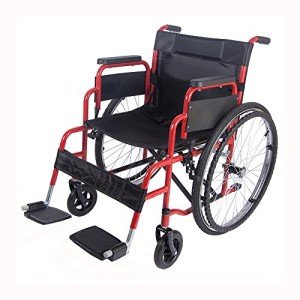
The wheelchair user must be comfortable while sitting in the chair. There are a variety of ways to make sure this is the case. First, the footplates must be in the correct place. Release the footrest latch and then move the footrests to make sure they are directly in front of the chair. Make sure that the wheelchair user is able to put their feet on the footplates and there is enough pressure on their feet.
The height of the footrest may require lower, particularly for people who are hemiplegic (one side of the body is more affected than the other). If the footrests are not high enough, they could cause pressure on the bones of the seat and cause discomfort and pain.
A forehead strap can help keep the user upright in their wheelchair particularly for those with neck muscles that are weak. They can be fitted by a specialist in mobility and can be used with wheelchairs that do not have headrests.
If the wheelchair comes with armrests, it is crucial that they are in a proper position so that the wheelchair user is able to propel without hitting them with their arms while they move. To ensure this it is recommended to use wheelchairs that have swing away or removable armrests. In addition, foam inserts could be cut and attached to the armrest's back in order to raise them to a more comfortable position.
It is also crucial that the wheelchair has a well-fitting cushion, particularly if the wheelchair user has a high risk of skin breakdown, or pressure ulcers. Pressure ulcers can occur when the skin rubs against the surface of the wheelchair. In certain instances the skin may be irritated and rough because of sitting in a single position for a long period of time. This may also cause blisters. To reduce the chances of pressure ulcers, the chair should be repositioned frequently.
Pushing
Self-propelled wheelchairs permit users to maneuver themselves and eliminate the need for someone else to push them. They are much easier to maneuver than other wheelchairs since they have larger rear wheels and push handles fitted on them. This allows them to move over a wide variety of surfaces without having to worry about tripping or getting stuck on obstacles such as curbs or steps that are small.
Be careful not to grip the chair handle too tightly when you move forward. Too much pressure can cause your hands to get cramped and limit the amount of force you can use. You can also use wheelchair gloves or handrim covers with grip materials in the palms. This will improve the posture of your hands and increase the force you use.
Keep the front casters clear of debris, like rocks or sticks. If the casters are encased with this type of material, it may make it difficult to move as you would expect from your wheelchair and could lead to a loss of control and/or injury. If you have a very high seat to floor height, it could be beneficial to purchase extra padding on the front casters.
If you are climbing a small step or curb, it is recommended that you enlist the help of a caregiver to push the wheelchair for assistance. If you are planning to do this on your own, further training and practice is required under the supervision of a health professional. It is essential to place the wheelchair perpendicularly (directly) towards the curb or with small steps and place the front tires just before the edge.
It is important to leave plenty of space in the space in front of you when moving up the hill. This will prevent you from colliding with other people. If you don't have a clear space ahead of you, you will gain speed very quickly and may collide with other people. To avoid what is self propelled wheelchair , try to be aware of those who are around you when you're on a slope. Also, have a carer or friend prepared to help you in the event that you begin to fall off your wheelchair.
Braking
A self-propelled chair requires the user to control the braking and guiding actions in a particular way to ensure the chair is safe to use. This is particularly crucial when on a slope as it is possible for the centre of gravity to move forward if the braking action is not performed in a controlled manner.
When pushing a wheelchair, ensure that the hand is in the proper position, ideally at 10 hours (10:00) on the wheel, and then releasing at two hours (2:00). This ensures that the bulk of the body's weight is on the rear wheels and allows for the smoothest, most simple push. It also helps to maintain the integrity of shoulder wrist, elbow and elbow joint.
To turn right in a wheelchair move forward on the right rim and then pull back the left hand rim. This will turn the wheelchair right so that you can remain in a seated position. Wheelchairs are also equipped with anti-tip bars which prevent the chair from tipping forwards.
Consult the user guide that is included with your wheelchair to determine the most safe slope your chair can traverse. In some situations, the wheelchair might need to be temporarily removed and hand operated to overcome steep gradients. If this happens, it is recommended that you seek assistance from a friend or relative and follow the steps outlined in the User Guide.
It is recommended to use ramps while negotiating kerbstones. This will decrease the amount of pressure needed on the rear and front tyres and allow you to traverse the kerb at a greater speed. The kerb climber option on many manual wheelchairs can assist with this process by increasing the ability of the wheelchair by about 10cm (4").
To stop a wheelchair, pull the joystick towards you to de-clutch the motor and then release the brakes. The wheelchair will then come to a stop which allows you to remove the footrests, prepare walking aids and get out of the chair.
Steering
The user is the one responsible for controlling and steering the wheelchair. There are numerous ways to accomplish this, dependent on the structure of the wheelchair and add-ons such as armrests or phone/drink holders. Wheelchairs vary in structure as well as size and weight. The size of a wheelchair's front casters can determine the terrain it will handle. Small casters enable wheelchairs to move more quickly, but it can be difficult on rough surfaces like grass or cobblestone. Large casters can let wheelchairs to travel on rough surfaces but it won't be nearly as fast.
On smooth surface that is level, the wheelchair user should push the wheels with both hands to keep the momentum. This is done by gripping the hand rims and pushing evenly with each hand. The hands shouldn't be wrapped around the rims of the hand in order to avoid injury and can cause over-corrections (fish-tailing) as the chair turns a corner. It is recommended that wheelchair users play with different degrees of leaning forwards and backwards to find the ideal balance between control and lean.
The person using a wheelchair must anticipate obstacles and plan ahead for more difficult terrain. It is important that the user of the wheelchair look over his or her shoulders regularly to prevent running into objects or other people. Also, if they are travelling with a caregiver, they must make sure that they are able to assist if needed. If the wheelchair is going to be used on an inclined slope, it must be driven or assisted by an adult until the user is familiar in this.
To turn the wheelchair, the user must push one hand rim forward while pushing the other rim back. It is best to practice on a flat, smooth surface prior to moving onto other surface. The motion could be uncomfortable, and the wheelchair may fall over if not properly mastered. If the wheelchair is equipped with power wheels, this can reduce some of the pressure off the user and makes turning easier. It is also beneficial to know that well-meaning but untrained strangers can try to push a person who is in wheelchair against their will, therefore the wheelchair user should make sure that their attendant handles fold down or cover them with handles covers.